
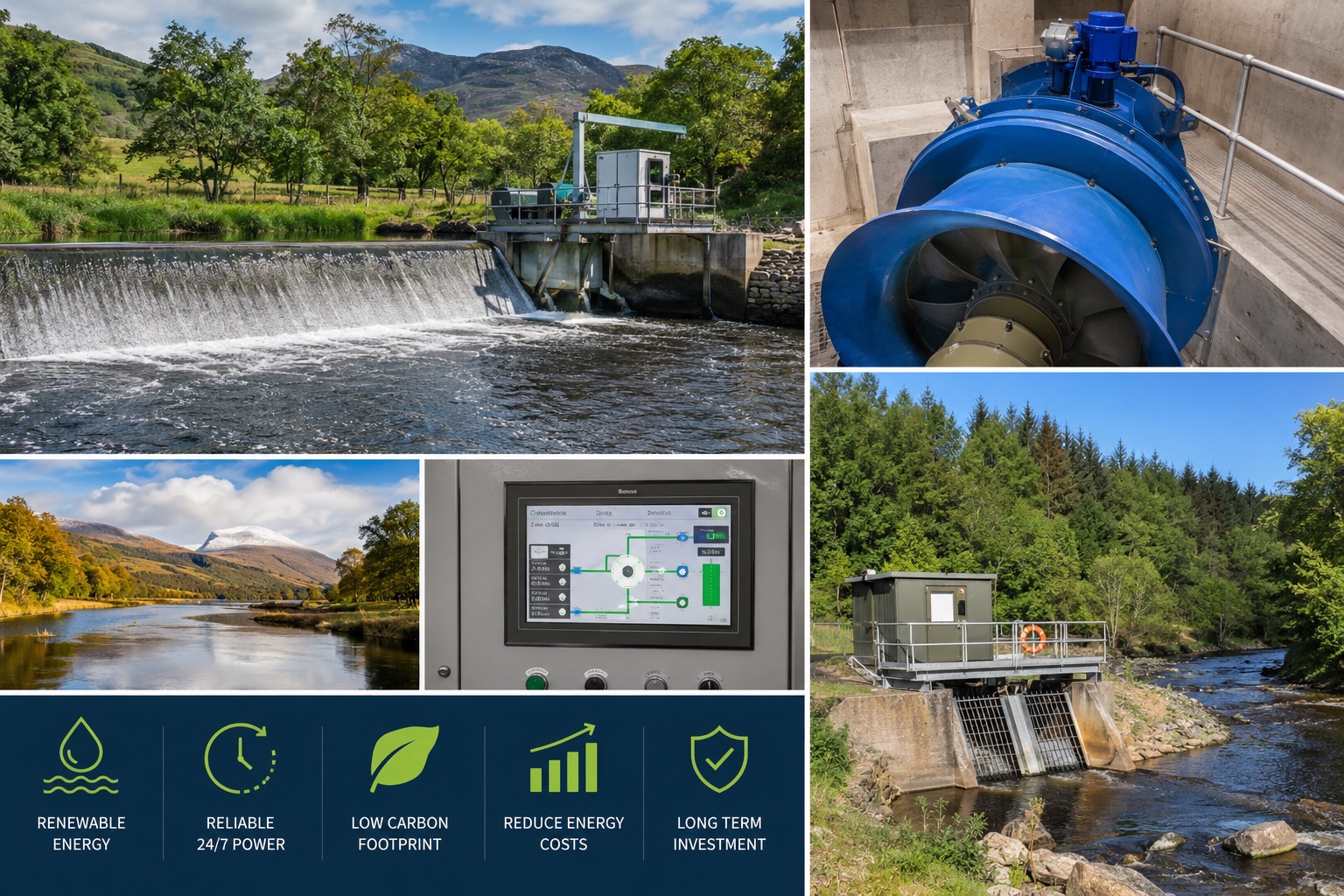
Harnessing the Power of Scotland’s Rivers
Low head hydro is a highly effective form of renewable energy generation that uses rivers, weirs, canals, and other watercourses where there is a relatively small vertical drop in water level. Unlike traditional high-head hydro schemes found in mountainous regions, low head hydro systems generate electricity using larger volumes of flowing water and a smaller change in elevation. These schemes are commonly installed alongside existing river structures such as weirs, mill races, and historic water management infrastructure.
For many landowners, estates, farms, industrial sites, and community energy projects across Scotland, low head hydro offers an opportunity to generate clean, reliable electricity from a natural resource that is available day and night throughout the year.
How Low Head Hydro Works
A low head hydro system captures part of a river’s flow and directs it through a turbine. As water passes through the turbine, it converts the energy of the moving water into mechanical power, which is then converted into electricity by a generator. The water is subsequently returned to the river with minimal impact on the surrounding environment.
Although the vertical drop may only be a few metres, substantial energy can still be generated when there is sufficient water flow. Modern turbine technologies have made low head hydro increasingly viable on sites that would previously have been considered unsuitable for hydroelectric generation.
Benefits of Low Head Hydro
Reliable Renewable Energy
Unlike solar and wind generation, hydro power can provide a consistent and predictable source of electricity. Many low head hydro schemes are capable of operating 24 hours a day, providing dependable renewable energy throughout the year.
Long Asset Lifespan
Hydro installations are renowned for their durability. With appropriate maintenance, hydro systems can continue generating electricity for several decades, making them an attractive long-term investment.
Reduced Carbon Emissions
Low head hydro generates electricity without burning fossil fuels, helping organisations reduce their carbon footprint and contribute towards net-zero objectives.
Revenue Generation
Electricity can be used directly on-site to reduce energy costs or exported to the grid, creating an additional income stream from an existing natural resource.
Environmental Compatibility
Many low head hydro projects are developed around existing weirs and water management structures, reducing the need for major new infrastructure. Modern schemes can incorporate fish-friendly designs and environmental mitigation measures to protect local ecosystems.
Why Scotland Is Ideal for Low Head Hydro
Scotland possesses some of the UK’s most favourable conditions for hydroelectric development, thanks to its abundant rainfall, extensive river networks, and rich history of hydro power generation. While the Highlands are often associated with large hydro schemes, low head opportunities exist throughout Scotland on rivers, burns, estate waterways, and former mill sites.
Many properties already have the key ingredients required for a successful scheme: a reliable water source, an existing weir or water control structure, and a suitable location for power generation equipment.